How do personalized perks increase insurance policy retention?
Learn how personalized perks boost engagement and increase insurance retention without discounts. Build loyalty and improve renewals effectively.
Insurance leaders know the hard truth: price alone doesn’t build loyalty. Customers stay when they feel understood, valued, and rewarded beyond the policy.


That’s where personalized perks come in.
If you’re exploring smarter strategies, this guide on how to increase retention without rebates or discounts breaks down why traditional incentives fall short and what works instead.
In this blog, we’ll focus on one proven approach: how personalized perks help increase insurance retention in a sustainable, scalable way.
Why retention is a growing challenge in insurance
Customer expectations have changed.
Policyholders now compare experiences across industries—telecom, fintech, and e-commerce—not just insurance. They expect relevance, convenience, and ongoing value.
Yet most insurers still rely on:
-
Renewal reminders
-
Discount-based retention
-
Generic loyalty programs
These tactics drive short-term action but fail to build long-term emotional loyalty.
The result?
-
High churn at renewal
-
Low engagement between policy cycles
-
Weak brand differentiation
To truly increase insurance retention, insurers need to shift from transactional benefits to personalized experiences.
What are personalized perks in insurance?
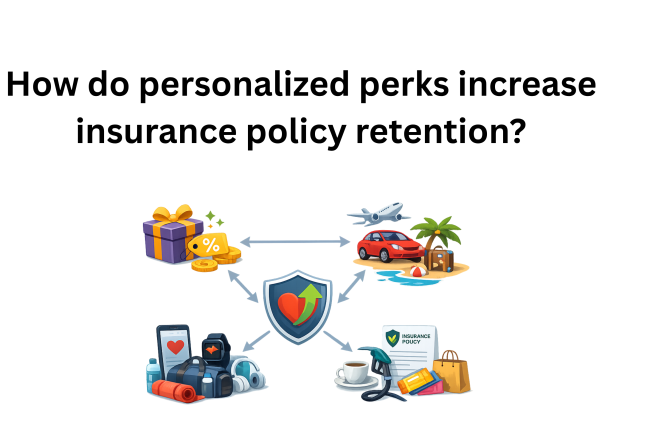
Personalized perks are tailored, non-monetary rewards aligned with a customer’s lifestyle, behavior, and preferences.
Instead of offering generic discounts, insurers provide relevant benefits such as:
-
Health and wellness subscriptions
-
Travel and mobility perks
-
Family-oriented offers
-
Digital service upgrades
These perks are dynamic and contextual, evolving with customer needs.
Key difference:
Discounts reduce the price.
Perks increase perceived value.
How personalized perks increase insurance retention
1. They create emotional loyalty, not just financial dependency
Discounts are easy to match. Experiences are not.
Personalized perks build a deeper connection by showing customers that the insurer understands their lifestyle.
For example:
-
A frequent traveler gets airport lounge access
-
A fitness-focused customer gets wellness rewards
-
A family gets child-focused benefits
This relevance creates emotional stickiness.
Impact: Customers stay because they want to, not because switching is costly.
2. They keep customers engaged between policy cycles
One of the biggest gaps in insurance is inactivity.
Customers often interact only:
-
At purchase
-
During claims
-
At renewal
Personalized perks change that.
They introduce continuous engagement through:
-
Monthly or quarterly rewards
-
Usage-based benefits
-
Behavior-driven incentives
Result:
Higher touchpoints = stronger relationships = better retention.
3. They enhance perceived value without increasing cost
Offering discounts directly impacts margins.
Perks, on the other hand, are often:
-
Partner-funded
-
Scalable
-
Cost-efficient
This allows insurers to deliver high perceived value at a lower actual cost.
Example:
A ₹500 discount reduces revenue by ₹500.
A perk worth ₹500 may cost significantly less through partnerships.
This makes perks a smarter lever to increase insurance retention without hurting profitability.
4. They enable segmentation and personalization at scale
Modern loyalty platforms allow insurers to segment customers based on:
-
Demographics
-
Policy type
-
Behavior
-
Engagement level
This enables targeted perk distribution.
Instead of:
One-size-fits-all rewards
You get:
-
High-value perks for premium customers
-
Engagement perks for inactive users
-
Renewal nudges tailored to risk profiles
This precision increases relevance—and retention.
5. They reduce churn triggers at renewal
Most churn happens at renewal when customers reassess value.
Personalized perks help reinforce that value consistently before renewal.
When customers think:
“I already get ongoing benefits from this insurer.”
They are less likely to switch.
Key advantage:
Retention becomes proactive, not reactive.
Use cases across insurance segments.
Personalized perks are flexible across insurance categories.
Health insurance
-
Wellness programs
-
Telemedicine access
-
Fitness rewards
Auto insurance
-
Fuel or mobility perks
-
Safe driving incentives
-
Travel-related benefits
Life insurance
-
Family-focused rewards
-
Financial wellness tools
-
Lifestyle subscriptions
Property insurance
-
Home services discounts
-
Smart home integrations
-
Emergency assistance perks
This cross-segment adaptability makes perks a powerful tool to increase insurance retention across the portfolio.
Why telecom and MVNO models are influencing insurance
Industries like telecom and MVNO have already shifted toward experience-led retention.
They use:
-
Bundled perks
-
Partner ecosystems
-
Lifestyle rewards
Insurance is now adopting similar strategies.
What insurers can learn:
-
Loyalty is built through continuous value
-
Ecosystems outperform standalone offerings
-
Personalization drives engagement
This convergence is shaping the future of retention.
Key features of an effective perks strategy
To successfully increase insurance retention, perks must be:
Relevant
Aligned with customer needs and preferences
Timely
Delivered at the right moment in the customer journey
Diverse
Offering a wide range of lifestyle categories
Easy to access
Seamless redemption experience
Measurable
Trackable impact on engagement and retention
Without these elements, perks risk becoming just another unused benefit.
Common mistakes insurers should avoid
Even well-intended programs fail without the right approach.
Watch out for:
-
Generic rewards: Low engagement, low impact
-
Overcomplicated redemption: Leads to drop-offs
-
Lack of communication: Customers don’t know the benefits exist
-
No personalization: Reduces perceived value
Avoiding these pitfalls ensures perks deliver real retention outcomes.
Measuring the impact of personalized perks
To validate success, insurers should track:
-
Renewal rates
-
Customer lifetime value (LTV)
-
Engagement frequency
-
Perk utilization rates
-
Net promoter score (NPS)
These metrics provide a clear view of how perks help increase insurance retention over time.
The future of insurance retention
Retention strategies are evolving from the following:
Price-driven → Experience-driven
Customers no longer stay for the cheapest option.
They stay for the best experience.
Personalized perks are at the center of this shift.
They transform insurance from a reactive product into an ongoing value-driven relationship.
Conclusion: Turn retention into a growth engine
If your retention strategy still relies on discounts, you’re leaving value on the table.
Personalized perks offer a smarter, more scalable way to:
-
Increase engagement
-
Strengthen loyalty
-
Improve lifetime value
Most importantly, they help you increase insurance retention without eroding margins.
Ready to build a retention-first insurance experience?
Explore how Paylode can help you design and scale personalized perks.
What's Your Reaction?